
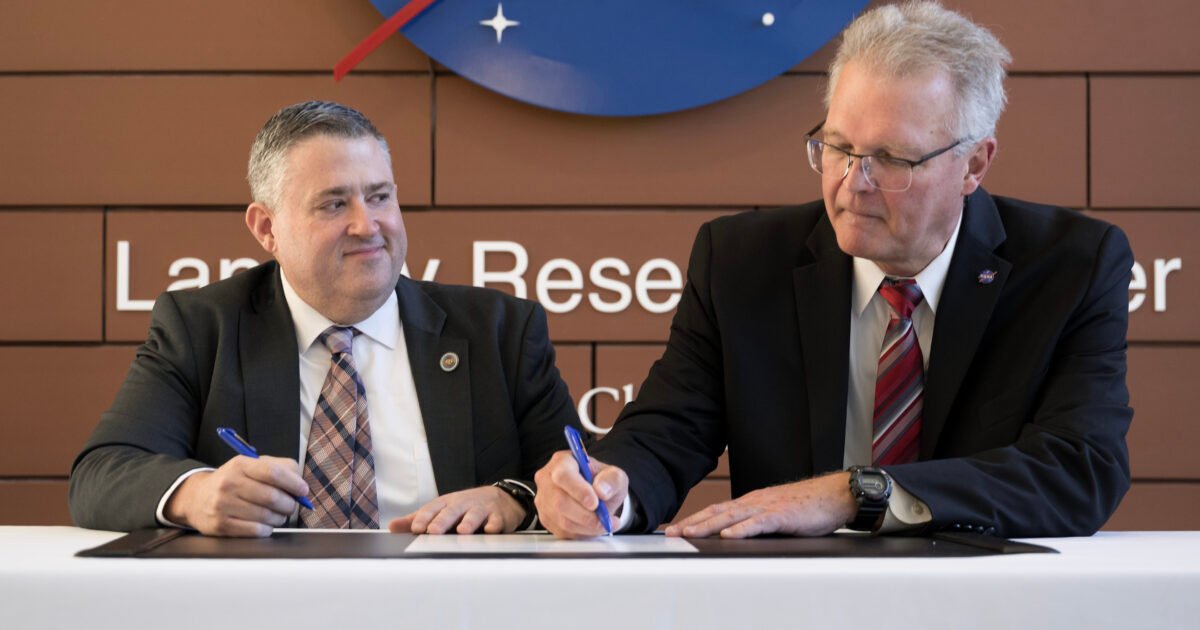
On October 23, 2026, NASA's Langley Research Center announced a new partnership with the Virginia Department of Energy to provide solar, meteorological, and weather risk datasets. The collaboration aims to support long-term energy planning in Virginia.
Partnership Agreement
NASA's Langley Research Center in Hampton, Virginia, signed a Space Act Agreement with the Virginia Department of Energy during a ceremony. Under the agreement, NASA will provide solar, meteorological, and future weather risk datasets to assist with energy system modeling and planning.
The partnership will incorporate NASA Prediction of Worldwide Energy Resources (POWER) data products into Virginia Energy's modeling and analysis system. State officials can access specific datasets through a digital pipeline connected to Langley's POWER web platform.
Expected Impacts
The agreement is intended to help state officials plan for extreme weather conditions and assess implications for electricity demand, energy generation, and system stress. NASA Langley Deputy Director Allen Kilgore stated that the collaboration will provide stronger energy security for the Commonwealth.
Virginia Energy Director Vince Maiden noted that the data will help the state understand how weather affects electricity supply and demand, identify vulnerabilities, and weigh resource tradeoffs.
Key facts and where they come from
- NASA Langley Research Center partnered with the Virginia Department of Energy under a new Space Act Agreement.
NASA’s Langley Research Center in Hampton, Virginia, is partnering with the Virginia Department of Energy to support informed decisions for effective energy generation, delivery and use by providing solar, meteorological, and future weather risk datasets for energy system modeling and planning purposes.
- The agreement infuses NASA POWER data products into Virginia Energy's modeling systems.
The partnership will infuse relevant NASA Prediction of Worldwide Energy Resources (POWER) data products into Virginia Energy’s modeling and analysis system.