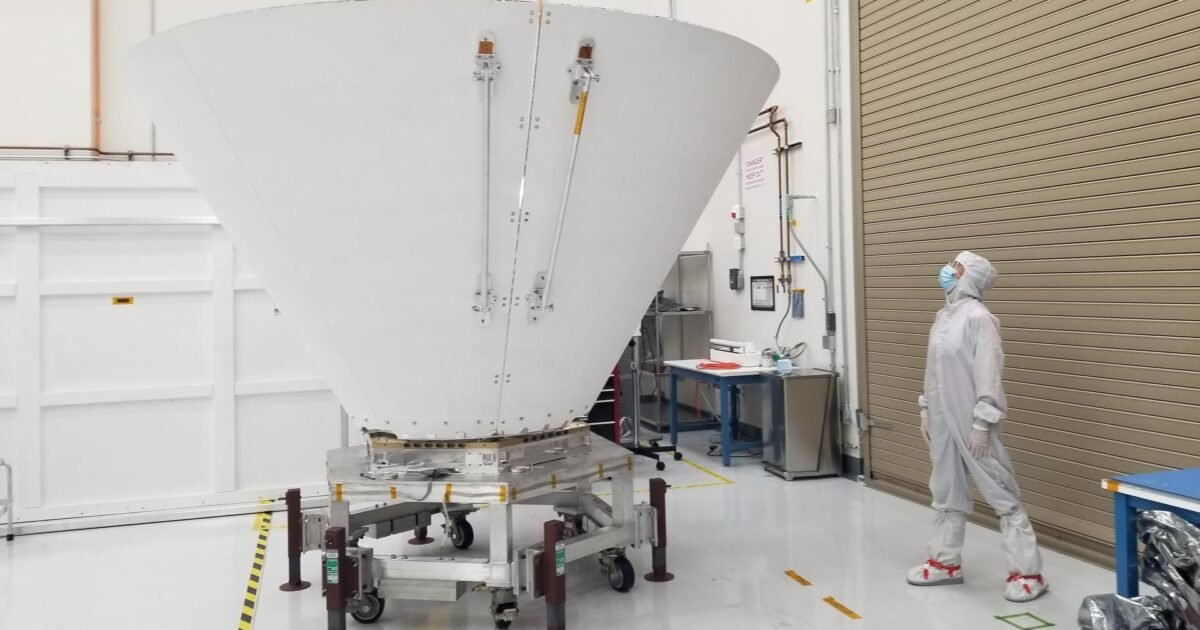
NASA announced on October 8, 2026, that its SPHEREx space telescope is finding thousands of brown dwarfs and mapping the chemical compositions of their atmospheres.
Spectral survey of dark wanderers
In a study published in The Astrophysical Journal, researchers analyzed SPHEREx observations of 37 nearby brown dwarfs. These celestial objects, which form from collapsing gas clouds like stars but lack the mass to sustain core hydrogen fusion, drift freely without host stars and are heated from within.
The observed objects span temperatures ranging from about 4,000 to minus 10 degrees Fahrenheit (2,200 to minus 20 degrees Celsius). SPHEREx measures their brightness across 102 different colors spanning deep red to infrared wavelengths, which are typically absorbed by water in Earth's atmosphere.
The resulting spectra revealed atmospheres containing water, carbon dioxide, carbon monoxide, and methane. While researchers have detailed observations for 37 objects so far, thousands more identified by the telescope are undergoing analysis.
Atmospheric complexity and models
The research team found that brown dwarf spectra vary considerably, even among objects sharing the same temperature. Some targets are undergoing transitions where clouds thin out and yield methane-rich atmospheres.
Zafar Rustamkulov, lead study author and scientist at Caltech's IPAC, stated that while state-of-the-art models capture general chemical trends, they struggle to match cloudy transitions observed in the data.
Co-author J. Davy Kirkpatrick noted that explaining the phenomena observed across these objects poses significant challenges, comparing the analytical work to meteorology.
Mission operations and data
SPHEREx launched in March 2025 and is managed by NASA's Jet Propulsion Laboratory. The spacecraft captures approximately 3,600 unique images each day to create full-sky maps, reconstruct conditions after the big bang, and locate interstellar ice and chemical precursors of life.
The telescope and spacecraft bus were built by BAE Systems. Science analysis is led by principal investigator Jamie Bock and project scientist Olivier Doré, with data archived at IPAC and made freely available to researchers and the public.
Key facts and where they come from
- The study analyzed SPHEREx observations of 37 brown dwarfs spanning temperatures from roughly 4,000 to minus 10 degrees Fahrenheit.
The study authors analyzed SPHEREx observations of 37 nearby brown dwarfs spanning the full brown dwarf temperature range, from about 4,000 to minus 10 degrees Fahrenheit
- SPHEREx captures light across 102 colors from deep red to infrared wavelengths.
The telescope measures their brightness in 102 different colors, from the deepest red our eyes can see, to the invisible heat of infrared light, creating a spectrum.
- The telescope captures approximately 3,600 images every day to map the sky.
The space telescope takes about 3,600 unique images per day to stitch into maps of the entire sky.
- SPHEREx was launched in March 2025 and is managed by JPL.
Enter NASA’s SPHEREx, an infrared space telescope launched in March 2025 and managed by the agency’s Jet Propulsion Laboratory in Southern California.