

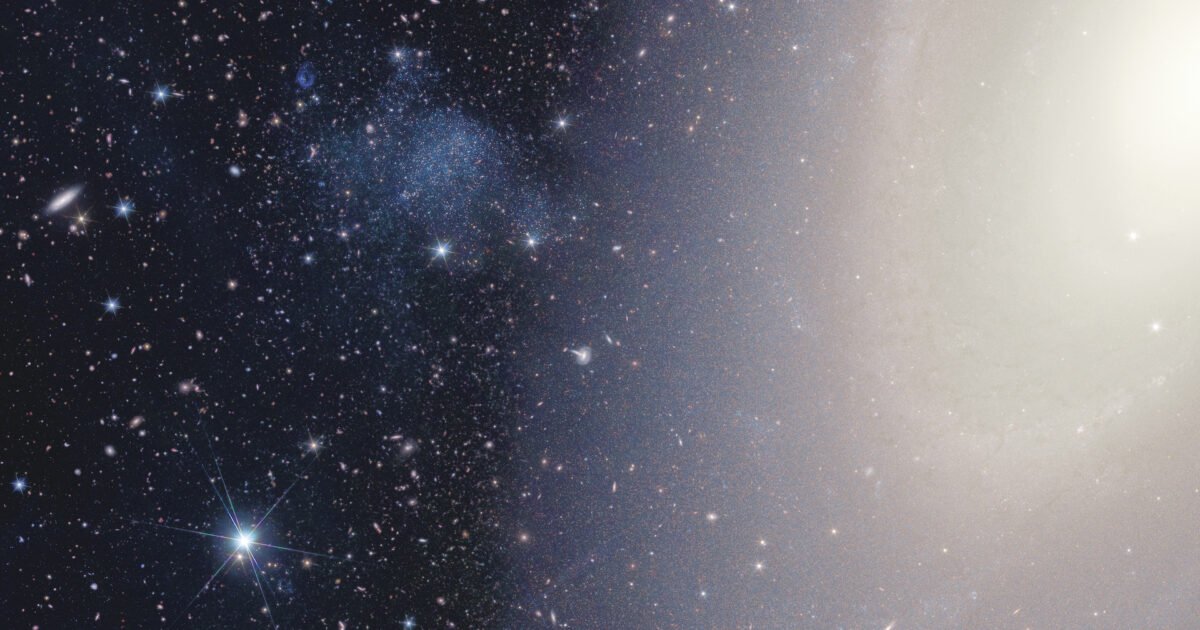
The Euclid satellite, launched in 2023, released its first major data set. It revealed a record 15,000 new strong gravitational lens candidates.
Record number of cosmic magnifying glasses
The Euclid satellite data revealed a record 15,000 new strong gravitational lens candidates, the largest collection ever.
Data volume and scope
The first major release of data from the European Space Agency’s Euclid space telescope comprises 1.7 million gigabytes of data.
It covers about 14 per cent of the total sky area Euclid will survey over six years.
Methodology and verification
Researchers used machine learning to parse the data, followed by citizen scientists and expert review of thousands of galaxies before confirming the lens candidates.
Key facts and where they come from
- Euclid satellite delivers first major data release with almost a billion galaxies and thousands of potential gravitational lenses.
The Euclid satellite, launched to investigate dark energy and dark matter, delivers its first major data release with almost a billion galaxies captured and thousands of potential gravitational lenses.
- UBC researchers helped uncover 15,000 new potential strong gravitational lenses, the largest collection of these cosmic tools.
UBC researchers helped uncover 15,000 new potential strong gravitational lenses — the largest collection of these cosmic tools that help astronomers investigate dark matter.
- The first data release comprises 1.7 million gigabytes of data.
The first major release of data from the European Space Agency’s Euclid space telescope comprises 1.7 million gigabytes of data.
- Analysis by a global consortium of more than 2,000 scientists, including more than 30 Canadians, revealed more than 900 million galaxies, 60 million quasars.
Analysis by a global consortium of more than 2,000 scientists, including more than 30 Canadians, revealed more than 900 million galaxies, 60 million quasars
- Before Euclid, we had less than a thousand confirmed strong lenses. Now we have 15,000 new candidates.
Before Euclid, we had less than a thousand confirmed strong lenses. Now we have 15,000 new candidates.