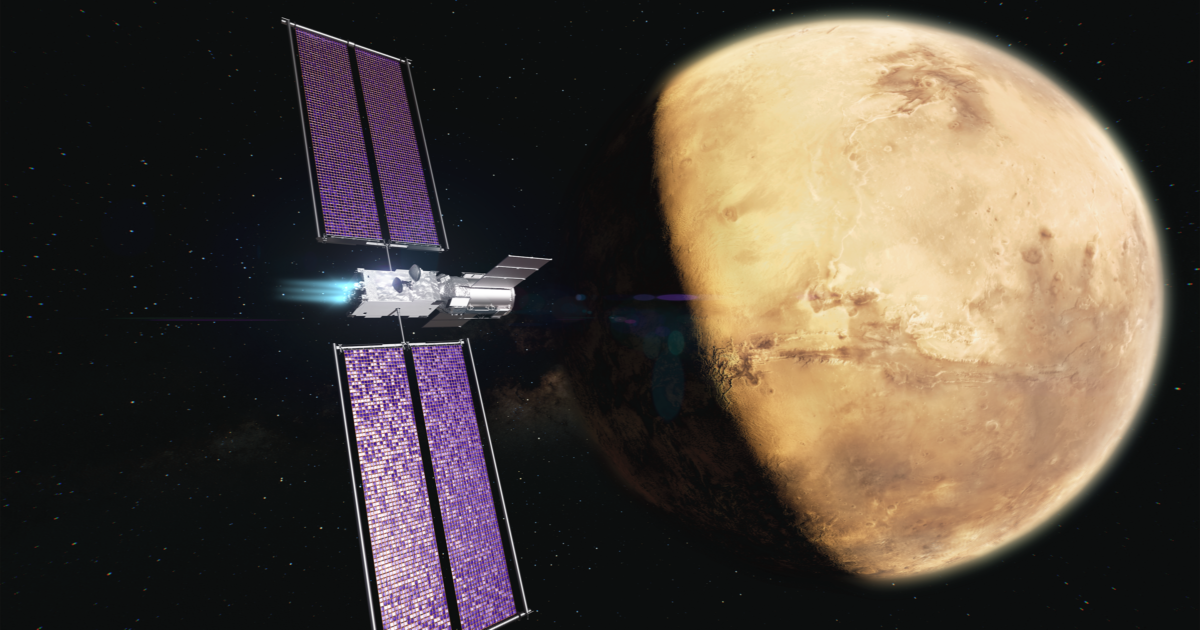
NASA completed a major design review in October and locked in key mission architecture elements for Space Reactor-1 Freedom. The fission-powered spacecraft is targeted to launch in late 2028 to demonstrate nuclear electric propulsion in deep space.
Design Updates
Experts from NASA, the U.S. Department of Energy, and industry met at NASA's Glenn Research Center in Cleveland for a mission design review in October. Teams decided to use a shorter boom and improved shielding to allow the reactor to operate closer to the spacecraft while maintaining necessary radiation protection.
NASA awarded a $39.3 million contract to Johns Hopkins University's Applied Physics Laboratory to develop the heat rejection system for the spacecraft's nuclear power module. The lab is working with Advanced Cooling Technologies as a commercial partner for heat pipe and composite radiator technologies.
Mission Profile
Planned for launch in late 2028, SR-1 Freedom will use both nuclear and solar power to deliver SkyFall, a capsule carrying three next-generation helicopters, to Mars. Once deployed, the helicopters will study Martian geology and climate history, explore new terrain, and search for subsurface ice.
After leaving Earth orbit, the spacecraft will activate and gradually increase reactor power before relying on solar arrays during its cruise to Mars. After delivering SkyFall to Martian orbit, SR-1 Freedom will restart its fission reactor to collect additional performance data.
Key facts and where they come from
- NASA plans to launch the Space Reactor-1 Freedom spacecraft in late 2028.
Planned for launch in late 2028, SR-1 will use both nuclear and solar power to deliver SkyFall, a capsule carrying three next-generation helicopters, to Mars.
- NASA awarded a $39.3 million contract to Johns Hopkins University's Applied Physics Laboratory for the heat rejection system.
NASA awarded a $39.3 million contract to Johns Hopkins University’s Applied Physics Laboratory to develop the heat rejection system for the spacecraft’s nuclear power module.