Innovation
New technology and breakthroughs from the labs, universities and companies that made them: first demonstrations, records, new chips, materials, batteries, quantum and robotics advances.

Canton Fair Showcases Advanced Robotics and Smart Tech
Phase 1 of the Guangzhou event highlights smart living solutions and service robots.
 Company press releases (PR Newswire)

UK Defense Secretary Highlights AI and Drones in Modern Warfare
UK Defense Secretary Wes Streeting outlined how rapid deployment of AI, drones, and autonomous systems is transforming modern military operations.
 UK Government
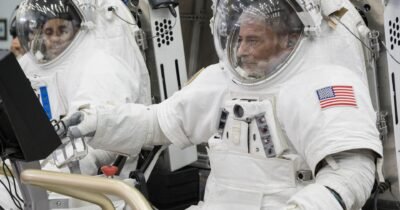
NASA Develops Solid-State Batteries for Lunar Operations
NASA is developing solid-state batteries to power future lunar operations in extreme temperatures.
NASA
ORNL Develops Motor Decide Platform to Evaluate Electric Motors
Researchers at Oak Ridge National Laboratory created a new platform to help manufacturers evaluate electric motor technologies amid supply chain uncertainties.
 DOE/Oak Ridge National Laboratory

MIT Drone Trajectory Planner Guarantees Collision-Free Flight
MIT researchers developed SANDO, an autonomous trajectory planner that mathematically guarantees drones will avoid moving obstacles in unmapped environments.
 MIT

CMU Researchers Win DOE Genesis Mission Awards for AI Tools
Carnegie Mellon researchers will develop AI tools for particle physics and fusion energy in Phase II of the Department of Energy’s Genesis Mission.
 Carnegie Mellon University

Linux Kernel Report Details Three Decades of Open Source Impact
The Linux Foundation released a report detailing the kernel's impact, growth, and evolution across global infrastructure.
 Linux Foundation

MIT Researchers Track Evolution of AI Hardware in Ongoing Survey
MIT researchers document the evolution of commercial AI accelerators through an ongoing survey to help guide hardware choices.
MIT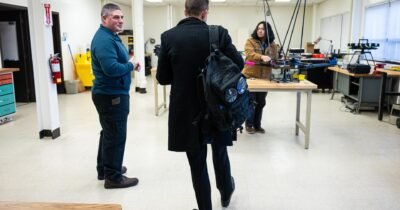
NASA tests pressure sensitive paint on model wing in Langley tunnel
NASA says the first-of-its-kind test shows how unsteady Pressure Sensitive Paint can measure airflow on a large, freely moving wing model, feeding better flight simulations.
NASA
MIT uses AI to make RNA vaccines stable at room temperature
MIT researchers say an algorithm trained on small datasets found lipid nanoparticle formulations that kept mRNA Covid-19 vaccines stable for a year without cold storage.
MIT