Spatial Intelligence: Why It’s AI’s Next Great Leap
Simeon Olaomo
3 min read
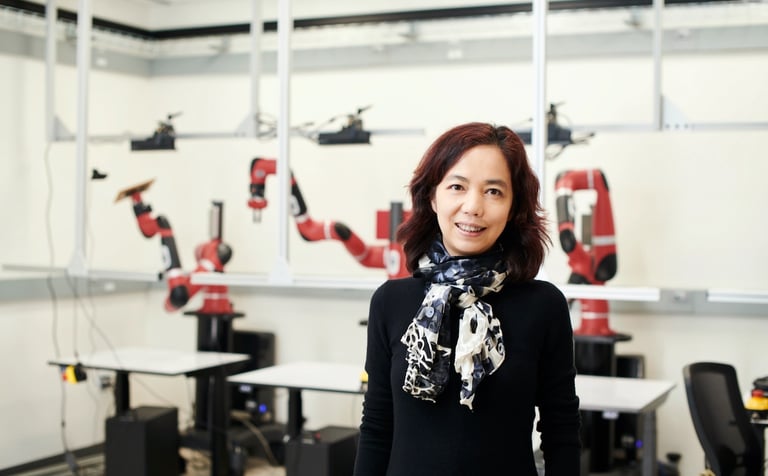



In her thought-provoking essay “From Words to Worlds: Spatial Intelligence is AI’s Next Frontier,” Dr. Fei-Fei Li, a pioneer of computer vision and founder of ImageNet, argues that the future of artificial intelligence depends on mastering spatial intelligence—a capability that enables machines to perceive, reason, and act within complex, physical environments at human-like levels.
Why Current AI Models Fall Short
While generative AI and large language models (LLMs) have revolutionized how we process language, code, and even images, Li notes their abilities are still fundamentally “wordsmiths in the dark”—they lack true experiential grounding and spatial understanding. Today’s AI can generate text or static images, but it cannot robustly interpret or interact with dynamic real or virtual worlds. Applications like autonomous robotics, advanced scientific discovery, immersive simulation, or creative 3D storytelling all hit walls due to this limitation.
The Evolutionary and Creative Roots of Spatial Intelligence
Spatial intelligence is deeply woven into human and animal evolution. Fundamental acts—parking a car, catching a ball, or navigating crowds—are possible due to an innate ability to process and act on spatial information. This capacity fuels creativity too: architects visualizing buildings, filmmakers inventing worlds, and children playing complex games all rely on spatial imagination that current AI lacks. History’s greatest scientific breakthroughs, from Eratosthenes measuring the Earth to Watson and Crick unveiling DNA, required manipulating and visualizing space—not just language.
What Are “World Models”—and Why Do They Matter?
Li introduces “world models” as the next phase in AI: foundational generative models capable of perceiving, reasoning, creating, and interacting within both virtual and real environments. Unlike LLMs, world models must:
Understand and simulate spatially and physically consistent worlds.
Be “multimodal,” capable of accepting visual, textual, numeric, and behavioral input.
Predict world state changes based on action, reflecting real dynamic environments.
This new type of intelligence underpins a future where AI can help with interactive storytelling, design, scientific modeling, robotics, and more—domains where language alone is insufficient.
Overcoming Technical Barriers
Achieving spatial intelligence demands breakthroughs on several fronts:
New universal training objectives beyond ‘next-token prediction’ in text models.
Leveraging large datasets (images, videos, sensor data, synthetic environments).
Innovating architectures to represent multi-dimensional worlds (3D/4D memory and context).
Li highlights her startup, World Labs, and its product “Marble,” as early steps—enabling creators to generate and interact with consistent 3D environments using multimodal prompts.
Real-World Impact: Creativity, Robotics, Science, and Health
The implications are sweeping. Marble and world models like it will:
Empower designers, filmmakers, and architects with rapid, intuitive creation.
Enable robots to learn tasks at scale, interact empathetically, and adapt to new settings.
Transform scientific research, letting AI collaborate in simulation, experiment, or deep exploration.
Advance healthcare and education by making learning and diagnostics more immersive, interactive, and effective.
The Human-Centered Vision
For Li, the goal is never to replace people but to augment us—extending creativity, care, and discovery in ways that respect human dignity. She contends that AI development and governance must always be guided by human needs and agency.
Conclusion:
The next decade of AI, according to Fei-Fei Li, will see the rise of spatial intelligence—moving beyond the realm of language to empower machines to understand, imagine, and help us shape the worlds we live in. This “world modeling” vision is set to revolutionize not only technology, but also how we create, learn, and care for one another in profound new ways.
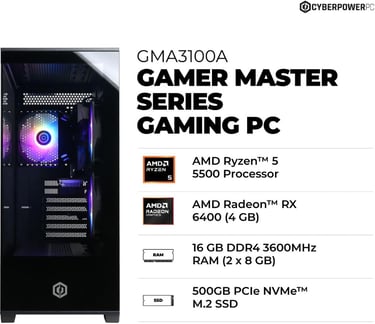
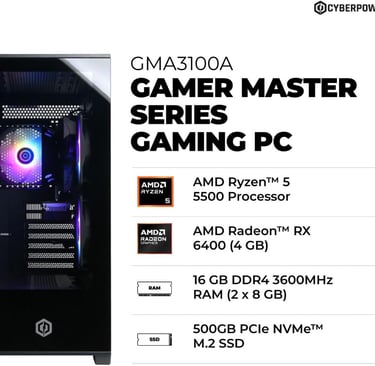
CyberPowerPC Gamer Master Gaming PC, AMD Ryzen 5 5500 3.6GHz, Radeon RX 6400 4GB, 16GB DDR4, 500GB PCIe Gen4 SSD, WiFi Ready & Windows 11 Home (GMA3100A)