Machine Learning vs AI vs Deep Learning: What’s the Difference?
Simeon Olaomo
3 min read
AI Confusion
If you’re like most people, you’ve heard the terms AI, Machine Learning, and Deep Learning tossed around like seasoning on a trendy dish. Everyone uses them, few explain them, and sometimes they seem interchangeable.
Spoiler alert: they’re not
What is AI?
Artificial Intelligence (AI) is the big umbrella term. It refers to machines designed to do tasks that would normally require human intelligence.
If you’ve used Siri, Google Assistant, or asked your fridge what the weather is (yes, that’s a thing now)—you’ve interacted with AI.
In fact, AI includes:
Rule-based systems (think: if X, then Y)
Learning systems (where the machine actually improves over time
AI aims for machines that can:
Recognize speech
Understand text
Make decisions
Recognize faces
Even write bad poetry (though humans still have
the edge here)
Summary: AI is the whole field of making computers smart.
What is Machine Learning?
Machine Learning (ML) is a subset of AI.
Instead of telling a computer exactly what to do, you give it data, and the computer learns from it.
Think of it this way:
If AI is teaching a kid, ML is letting the kid figure it out by trial and error (with lots of snacks).
How does ML work?
You feed the algorithm examples:
Spam vs. not-spam emails
Images of cats vs. dogs
Credit card transactions that are fraudulent or legit
The machine learns patterns from this data and can then make predictions on new, unseen data.
Types of ML:
Supervised learning: You give labeled data (“this is spam”).
Unsupervised learning: No labels—machine finds patterns on its own.
Reinforcement learning: Machine learns by trial/error (how video game AI learns to win).
Summary: ML is how computers learn from data.
What is Deep Learning?
Deep Learning (DL) is a type of Machine Learning… on steroids.
It uses neural networks—algorithms inspired by the human brain—with many layers (“deep” = many layers).
This allows DL to handle complex tasks like:
Image recognition
Speech recognition
Natural language processing
Driving cars (yep, Tesla)
Why Deep Learning matters:
While traditional ML often requires manual feature engineering (aka humans deciding what data points to focus on), DL can automatically discover useful patterns in raw data.
Example: instead of telling the machine what edges or shapes to look for in an image of a cat, a deep learning system figures that out for itself.
Summary: DL is ML with complex neural networks and lots of data.
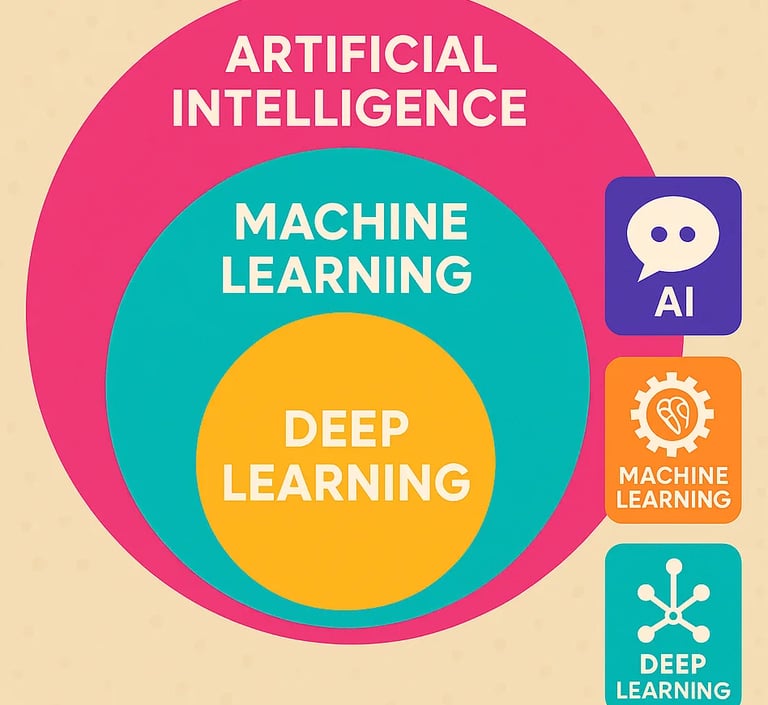
How They Relate (The Russian Doll Analogy)
Imagine Russian nesting dolls:
Big doll = AI
Inside it: ML
Inside that: DL
So:
Deep Learning = Machine Learning = Artificial Intelligence
Real-World Examples
TermExample You KnowArtificial Intelligence (AI)Siri, Google AssistantMachine Learning (ML)Netflix recommendations, fraud detectionDeep Learning (DL)Self-driving cars, ChatGPT, deepfake videos
Why Should You Care?
Great question! Here’s why:
Job Market: Understanding these differences helps when reading tech job postings.
Tech Conversations: No more blank stares when colleagues throw around AI/ML/DL acronyms.
Smart Choices: If you’re building products or buying services, it helps to know what’s really under the hood.
Future-Proofing: AI and its branches are reshaping industries—being informed is key.
Final Thoughts
So next time someone says, “We’re using AI!” you can politely ask:
“AI as in general intelligence, or is it ML? Oh wait… is it Deep Learning with neural networks?”
Either way—you’ll sound informed.

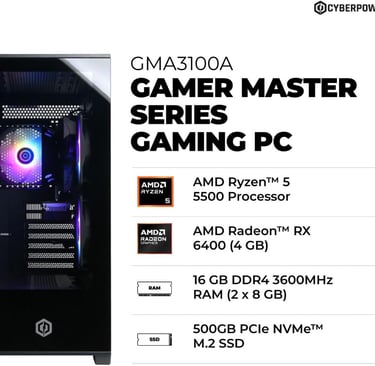
CyberPowerPC Gamer Master Gaming PC, AMD Ryzen 5 5500 3.6GHz, Radeon RX 6400 4GB, 16GB DDR4, 500GB PCIe Gen4 SSD, WiFi Ready & Windows 11 Home (GMA3100A)



reComputer J4011-Edge AI Device with NVIDIA Jetson Orin™ NX 8GB Module, 4xUSB 3.2, M.2 Key E & Key M Slot, Aluminum case, Pre-Installed Jetpack System
Continue reading...