Daylight AI agentic MDR for startups - $33M Series A Seed Funding
Simeon Olaomo
10 min read

The Paradigm Shift Nobody Saw Coming—Until Now
The managed detection and response (MDR) market has long operated on a simple, inefficient formula: throw more analysts at the problem. For years, security operations centers have been trapped in a cycle of alert fatigue, manual triage, and escalation friction. But Daylight AI has fundamentally broken this pattern by introducing Managed Agentic Security Services (MASS), a category that pairs AI agents with elite human expertise to deliver something the market didn't know it needed: autonomous threat resolution.
This isn't just an incremental innovation in cybersecurity. It's a structural shift in how enterprises defend themselves, with direct implications for scaling tech startups, venture-backed companies, and mid-market organizations facing cyber threats at machine speed.
What Daylight Brings to the Table: Beyond Traditional MDR
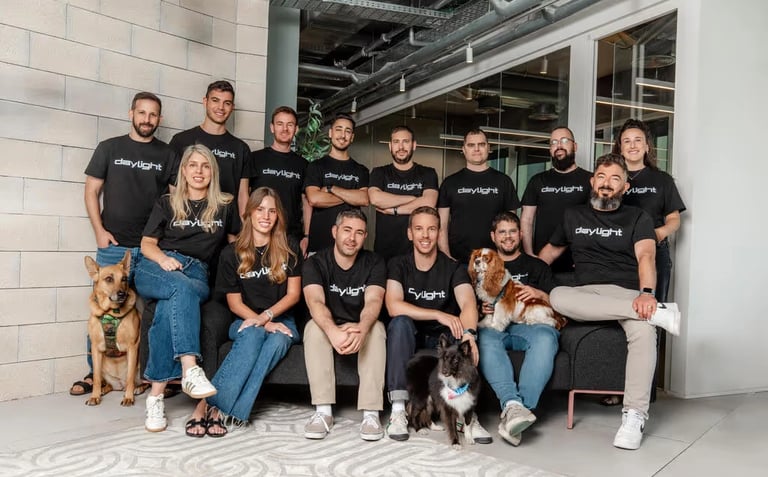
Daylight Security emerged from stealth in July 2025 with a single mission: to dismantle the MDR model that's dominated for the past decade. Founded by Hagai Shapira and Eldad Rudich—both veterans of Israel's Unit 8200 intelligence unit and early architects at Torq—Daylight was built by engineers who intimately understood the gap between what security teams need and what traditional vendors deliver.
The core distinction lies in what they've chosen to prioritize: autonomous threat resolution, not alert escalation.
The Daylight Model: Agentic AI Meets Human Oversight
At its foundation, Daylight's platform operates on a hybrid architecture. Agentic AI agents handle the data-intensive work: ingesting telemetry, correlating events, piecing together attack patterns in real time, and executing initial investigation and containment steps. But where Daylight diverges from pure automation is the human layer. PhD-level analysts remain in the loop, supervising, validating, and continuously training the system to improve contextual understanding.
This isn't a choice between speed and accuracy—it's a way to achieve both.
Key performance indicators paint the picture:
Deployments completed in under one hour: No months-long implementation cycles or complex integrations holding back time-to-value
Up to 90% fewer false positives: The industry's chronic pain point—alert noise—is substantially eliminated
5X reduction in MTTR (Mean Time to Response): Customers report dramatically faster incident resolution
80% reduction in MTTR: Some deployments see even more dramatic improvements in response time
For growth-stage companies navigating Series A fundraising, these metrics translate to a critical security operations capability without the overhead of hiring an in-house SOC team.
What Makes Daylight Different: Four Architectural Advantages
ChatOps Integration for Native Collaboration
Daylight doesn't impose friction between security teams and their tools. Instead, it embeds directly into the workflows security analysts already use—Slack, Microsoft Teams, custom ticketing systems. Through ChatOps integration, analysts can query the system, validate findings, and trigger remediation workflows from their existing communication channels. This design choice alone eliminates the context-switching tax that depletes analyst productivity at most other vendors.
Context-Aware Intelligence That Learns
The platform continuously absorbs organizational context—not just from raw security events, but from historical cases, team workflows, and even Slack conversations. This enables Daylight's AI to distinguish signal from noise in ways that purely statistical systems cannot. For a Series A startup running distributed infrastructure across cloud environments, this context awareness means fewer false escalations and more actionable alerts that actually warrant human attention.
Seamless Integration Across Any Stack
Most MDR vendors pitch "broad integration" then require weeks of engineering effort to connect to proprietary tools. Daylight commits to something more ambitious: unlimited integrations built on demand. The platform is designed to connect with any cloud or on-premises environment—SIEMs, EDRs, identity systems, cloud workload platforms—and the engineering team develops new integrations within days, not quarters.
Measurable, Transparent ROI
Daylight provides AI-driven dashboards that make security ROI visible in financial terms leadership actually understands. MTTR reductions, false positive elimination, analyst hours saved—all tracked and reported with precision. For growth-stage companies presenting to boards and investors, this transparency is a competitive advantage.
Research and Development: The Foundation Behind Autonomous Defense
Daylight's engineering is rooted in practical SOC experience, not pure AI research. This matters because it means the company is optimizing for operational reality, not academic purity.
The R&D Thesis: Agentic Investigation Over Stateless Detection Most security vendors build detection engines—rules and models that spot malicious behavior. But detection is only the first step. The harder problem is investigation: understanding context, correlating events across systems, distinguishing legitimate anomalies from actual threats, and determining scope of compromise.
Daylight's R&D focuses on agentic AI that can reason through investigations autonomously. The company's agents don't just pattern-match; they:
Traverse security and IT infrastructure to gather context
Reason about attack feasibility and likely adversary objectives
Correlate events across disparate systems
Provide human analysts with a coherent narrative of what happened
Recommend or execute containment actions
This is fundamentally harder than detection, which is why the company is investing in it.
The Team Behind the Tech
Eldad Rudich, Daylight's CTO, was the first engineer at Torq. He built the security automation systems that made Torq a category leader. His expertise in orchestration means Daylight's agentic architecture isn't just theoretical—it's built on hands-on experience automating real security workflows.
The team also includes security veterans from Israeli intelligence, where they developed operational security practices at scale. This background influences everything Daylight builds: the emphasis on human-AI collaboration, the focus on reducing false positives, the obsession with response time.
How Agentic Security Impacts Cybersecurity Strategy
The emergence of agentic MDR represents a structural shift in how organizations think about security operations. Historically, SOC teams were costs—necessary overhead but not revenue drivers. With agentic AI, the ROI calculus changes:
Analyst productivity multiplies: One analyst can oversee multiple AI agents, each handling investigation and initial response autonomously
False positive burden collapses: Manual triage—the biggest waste of analyst time—is largely eliminated
Response speed reaches machine tempo: Investigations that took hours now complete in minutes
Threat hunting becomes continuous: The AI can surface novel attack patterns humans might miss, enabling proactive hunting rather than pure reactive response
For growth-stage companies, this means you can operate a credible security operation without hiring a 20-person SOC team before Series B.
Why Daylight Matters for TechUpscale Audiences:
The Founder and CTO Perspective Daylight's positioning is directly relevant to the tech startup community for several specific reasons.
The Series A Security Dilemma Growth-stage founders face a specific challenge: traditional enterprise security tools assume you already have a mature security operation. MDR services designed for Fortune 500 companies come with pricing and overhead that crushes startup unit economics. Hiring internal security talent is competitive with hiring engineers, and the market is tight.
Daylight disrupts this trade-off. Because its agentic AI handles the data analysis and initial response work, the service can operate at lower cost than traditional MDR while delivering equivalent or better coverage. For a Series A company raising $5-15 million, Daylight's pricing and time-to-deployment model enables credible security without sacrificing engineering headcount.
The Investor Expectation Shift More importantly, investors now expect security practices that are both robust and proof-of-concept-grade. The shift toward agentic MDR is becoming an explicit evaluation criterion. When Craft Ventures—one of the most selective early-stage investors—leads a Series A for an MDR company, it signals that security VCs see agentic AI as the next generational shift. For founders pitching Series B investors, having Daylight or a comparable solution in place demonstrates security maturity without requiring enterprise-scale security team.
The Integration Reality Tech founders and CTOs live in ecosystems: CI/CD pipelines, cloud platforms, identity systems, ticketing tools, messaging apps. Daylight's commitment to unlimited integrations and ChatOps-native collaboration means it can be adopted without forcing a complete rewrite of existing workflows. This matters because hidden integration costs kill adoption of enterprise security tools at growth-stage companies.
The Talent Market Even if a startup could hire top SOC analysts, the turnover risk is high—analysts burn out on alert fatigue and get recruited to larger companies offering better stability. Daylight's model means you hire fewer analysts and empower them with AI-driven tools. This is better for analyst retention and better for the startup's bottom line.
The Broader Impact: Agentic AI and Cybersecurity Economics
Daylight's emergence reflects a deeper realization in the security industry: the current model—humans overwhelming by alerts—cannot scale.
Industry Context: Why Now? Several forces converge:
Attack volume is accelerating: Cyberattacks rise 50% year over year. The average cost of a data breach now exceeds $4.45 million. This creates pricing power for security vendors but also an impossible operational burden for customers.
AI-driven attacks are proliferating Adversaries are automating their offense, which means defenses must operate at comparable speed. Manual SOC processes are simply too slow.
GenAI has made agentic AI practical: Two years ago, the idea of autonomous AI making security decisions felt speculative. Now, with large language models demonstrating reliable reasoning, the technology is real.
The security talent shortage is deepening: There aren't enough skilled security analysts, and there won't be. The industry has accepted this constraint and is building toward a post-human-manual-analyst model.
The Emergence of MASS (Managed Agentic Security Services)
Daylight's framing of "Managed Agentic Security Services" as a distinct category is important. It separates agentic MDR from traditional MDR in ways that matter:
Traditional MDR: Vendors provide detection rules and threat intelligence; customers provide analysts; vendors provide escalation when something is ambiguous
Agentic MDR: Vendors provide AI agents that investigate, correlate, and recommend action; vendor analysts validate and supervise; customers' internal teams only engage on exceptions
This is categorically different. It's the difference between a helper and a performer.
Cross-Industry Precedent Agentic AI is already transforming other security domains. In application security, AutoFix models can now identify vulnerabilities and generate fixes automatically, reducing vulnerability-to-patch time from weeks to hours. In identity, AI agents can continuously monitor behavior patterns and revoke suspicious access instantly. Daylight is simply applying this pattern to the detection and response layer.
The Non-Human Identity Challenge One emerging complexity in agentic security is the rise of non-human identities (NHIs)—API keys, service accounts, tokens that AI agents require to operate. As agentic systems proliferate, managing which agents have access to which systems becomes a new security problem. Companies like CyberArk are explicitly building products around "Secure AI Agents" to manage this risk. For enterprises adopting Daylight or similar solutions, this is a secondary consideration but an important one.
Specific Use Cases Where Daylight Delivers Outsized Value
Growth-Stage SaaS Companies (Series A-B) For a SaaS startup with a founding team of 30-50 people and a customer base of 50-500 companies, traditional MDR creates budget friction. Daylight enables these companies to demonstrate credible security operations to enterprise customers without hiring a dedicated security team. The rapid deployment (under one hour) matters because at this stage, every day without a security baseline increases risk for both the startup and its customers.
Fintech and Regulated Tech Financial services, healthcare tech, and other regulated sectors face mandatory security operations requirements. Daylight's approach enables these companies to meet regulatory expectations (SOC 2, PCI DSS, HIPAA-eligible practices) without the compliance overhead of managing an in-house SOC. The platform's audit-ready reporting accelerates the compliance cycle.
European and GDPR-Native Companies Daylight has strong footing in Europe, where GDPR compliance creates both operational complexity and budget constraints. The platform's ability to operate across geographies with distinct data residency requirements is an advantage.
Cloud-Native and Containerized Infrastructure Organizations running Kubernetes, serverless, or hybrid cloud architectures often find traditional endpoint-focused MDR insufficient. Daylight's planned cloud workload protection module is explicitly designed for this reality.
Internal and External Linking Strategy: Understanding Daylight's Broader Context To fully grasp Daylight's significance, it's useful to understand the competitive and technological ecosystem:
On the competitive front, detailed comparisons of traditional MDR alternatives are available through Gartner's Magic Quadrant for MDR, where CrowdStrike and SentinelOne typically appear as leaders. Understanding their positioning helps clarify where Daylight is disrupting.
On the agentic AI front, frameworks like NIST's Cybersecurity Framework provide foundational governance, while emerging research on agentic systems and their security implications continues to mature. The World Economic Forum recently published research on non-human identities as a critical cybersecurity frontier, which is directly relevant to how agentic MDR systems should be governed.
On the market structure front, research firms including Gartner, Forrester, and ESG have published analyses on the MDR market's growth trajectory. Daylight's emergence and funding directly reflect the market signals these analysts have been tracking.
On the startup ecosystem front, understanding how Series A companies should approach security is increasingly important. Resources like the Founders Institute and Startup Grind have highlighted security as a top-10 operational priority for scaling companies.
Key Takeaways for Different Audiences
For Founders and CTOs: Daylight represents a new model for how security operations should work at growth stage. Rather than building or buying traditional tools, consider agentic MDR as your security operations foundation. The ROI case is compelling time to deployment measured in hours, false positives nearly eliminated, response speed transformed.
For Series A Investors: Agentic security is an emerging category with structural advantages over traditional approaches. Companies that adopt it gain defensibility, faster fundraising narratives, and operational leverage. An investment in Daylight or a Daylight-like capability is an investment in security infrastructure becoming more autonomous and efficient.
For Security Teams: The shift from alert triage to intelligent investigation represents a fundamental change in job design. Rather than viewing AI as a threat to employment, the evidence suggests it's liberating analysts from repetitive alert drowning to focus on actual adversary behavior and strategic threat hunting.
For Customers of These Services: Daylight's model—autonomous investigation supervised by humans—is genuinely different from what traditional MDR vendors offer. It's worth evaluating specifically for the autonomous resolution capability, not just the detection breadth.
Looking Ahead: What's Next for Agentic Security
Daylight's roadmap signals where the broader security market is heading:
Identity Threat Response will likely become as critical as endpoint detection. As attacks increasingly target identities and service accounts, autonomous identity investigation will be essential.
Cloud Workload Protection reflects the reality that containerized and serverless environments are where infrastructure is actually running. Autonomous defense in this domain remains underdeveloped.
Threat Hunting as a Service should emerge as agentic systems become sophisticated enough to discover novel attack patterns humans might miss. This is fundamentally different from rule-based detection.
Cross-Platform Correlation will deepen as multiple agentic systems (endpoint, network, cloud, identity) learn to share context and collaborate on investigations.
The broader implication: the security industry is moving toward a model where humans make decisions and strategy while AI handles execution, investigation, and response at machine speed. Daylight is one of the earliest and most well-capitalized examples of this shift.
Conclusion: Why Now Matters for Your Security Strategy
The convergence of attack acceleration, AI maturity, and analyst scarcity has created an opening for a new category of security service. Daylight has identified this opening, built a compelling technical solution, and secured validation from investors who understand the market deeply.
For growth-stage tech companies, the implications are direct: you can now operate enterprise-grade security operations without enterprise-scale headcount. For security professionals, it signals that the future of SOC work is less about manual triage and more about strategic threat hunting and decision-making. For investors, it demonstrates that agentic AI is moving beyond hype into productized, revenue-generating reality.
The MDR market will likely consolidate around winners who can genuinely deliver autonomous investigation and response. Daylight is positioned to be one of them. Whether you're evaluating Daylight directly or simply tracking where enterprise security is headed, the company's trajectory is worth watching closely.
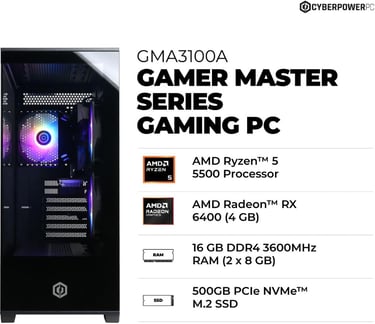
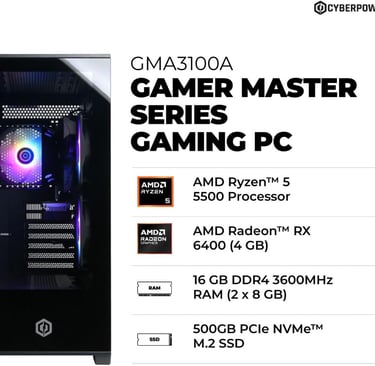
CyberPowerPC Gamer Master Gaming PC, AMD Ryzen 5 5500 3.6GHz, Radeon RX 6400 4GB, 16GB DDR4, 500GB PCIe Gen4 SSD, WiFi Ready & Windows 11 Home (GMA3100A)