Apple Humanoid Robots: How Apple Could Earn $133 Billion a Year by 2040
Simeon Olaomo
7 min read
Introduction
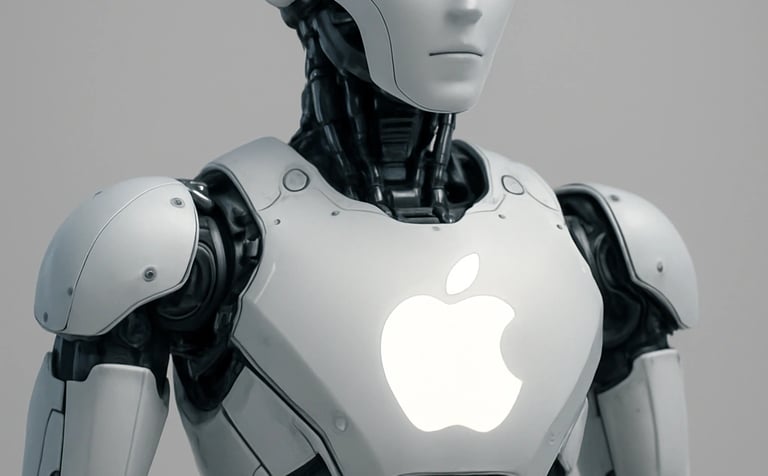
In early November 2025, Morgan Stanley released a research note suggesting that Apple’s next major product frontier could lie not only in screens, services or vehicles—but in humanoid robotics. According to this thesis, Yahoo Finance reports Apple could generate upwards of US $130 billion to US $133 billion annually by around the year 2040 from its robotics business.
For TechUpscale audience—investors, technologists and growth strategists—this presents a compelling “what-if” scenario worth unpacking: how credible is the vision, what are the key assumptions, and what would Apple need to do (and overcome) to make robotics a truly transformative business.
In this review I will:
Outline the headline numbers and core assumptions behind the Morgan Stanley (MS) forecast
Analyze Apple’s strategic positioning and how it might win in humanoid robots
Explore key risks, barriers and competitive threats
Offer likely scenarios and implications, including for investors and the broader robotics ecosystem
Conclude with a strategic verdict: how likely is this, and what to watch
1. Headline Forecasts & Assumptions
Morgan Stanley frames the opportunity for Apple as part of the broader “embodied AI” or humanoid-robotics market. Some key figures:
The global humanoid-robotics market could reach ≈ US $5 trillion annually by 2050.(Investing.com)
For Apple specifically, Morgan Stanley estimates that by ~2040 the company could capture ~9 % market share of the relevant segment, translating into ~US $130 billion in annual revenue in a “median case”. (IndexBox)
In the optimistic scenario, Apple’s share could be as high as ~22 %, bringing revenue closer to US $300 billion annually by 2040. (AppleInsider)
Additional relevant assumptions: slow early adoption of humanoids, with major acceleration in the late 2030s/2040s. (Morgan Stanley)
So broadly: Apple has a late-2030s-to-2040 runway to make humanoids part of its core business, on a par with iPhone, Services or other pillars.
2. Why Apple Could Win in Humanoid Robotics
Let’s examine what gives Apple a plausible shot at this vision:
a) Integration strength
Apple has historically controlled hardware, software, services, manufacturing and ecosystem in an integrated way. Morgan Stanley views that as a major advantage: “the company designs its own chips, writes the software, and connects more than two billion active devices through one ecosystem.” (AppleInsider)
In humanoid robotics, where hardware (mechanics & sensors), firmware, AI and ecosystem services must converge, such an integrated model could provide a competitive moat.
b) Existing scale and customer base
Apple’s installed base (iPhones, iPads, Macs, Watches) gives it a massive addressable audience and the ability to bundle services or adjacent hardware. Even if humanoid robots initially serve commercial/industrial customers, Apple could later leverage consumer channels.
c) Manufacturing and supply-chain expertise
Apple has decades of experience in large-volume manufacturing, global supply-chain operations and global brand scale. Transitioning from devices to robots is non-trivial, but Apple is arguably better positioned than many purely robotics startups.
d) Early signals
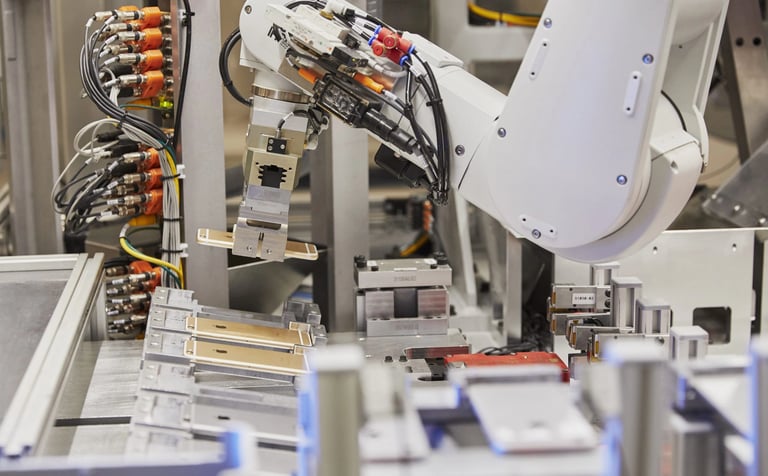
While Apple has not publicly launched a humanoid robot, analysts point to its investments in sensor fusion, mechanical systems (e.g., the Daisy recycling robot) and its “Project Titan” car program as technological and organizational foundations for robotics. (AppleInsider)
e) Services and recurring revenue potential
If Apple launches humanoids, the hardware sale could be just the beginning. Recurring services, software subscriptions, integrations with Apple’s ecosystem (AI features, home/office automation) could enhance lifetime value—similar to how its Services business grew.
In short: Apple has many of the building blocks required for meaningful entry into humanoid robotics—and that is a key enabler for the large-scale revenue scenario posited.
3. Key Risks, Barriers & Competitive Threats
While the vision is exciting, several major hurdles must be addressed. For Apple—and for investors—it’s critical to recognize these.
a) Technological challenge & time-to-market
Humanoid robots remain at an early stage. While industrial robots are common, general-purpose humanoids capable of safe, useful tasks in homes/businesses face hardware, sensing, software, reliability, safety and cost hurdles. Morgan Stanley itself notes major adoption will come in the late 2030s. (Morgan Stanley)
If Apple misses timing, or if the tech proves harder than expected, the ramp could be delayed significantly pushing revenue out beyond 2040.
b) Cost and business-model viability
Early versions of humanoids are expensive (Morgan Stanley estimated ~$200,000 average selling price in high-income countries in current timeframe) with slow cost declines. (Morgan Stanley) and in some cases $25, 000 for Tesla Optimus
These high prices limit addressable volume initially. Unless costs fall rapidly and use-cases expand, monetization may be limited to niche/industrial, not mass-market.
c) Market adoption & use-case clarity
Robots must solve real pain points (labor shortages, repetitive/dangerous tasks, home automation) to scale. If early deployments are too narrow or customer economics weak, adoption may stall. Morgan Stanley highlights that home use remains the most uncertain. (Investors)
d) Competitive intensity
Apple isn’t alone. Companies like Tesla, Inc. (with its “Optimus” robot), Nvidia Corporation (with its robotic-AI stack) and many robotics/industrial players are moving. Apple must not only build a best-in-class product but also defend against entrants from both consumer and industrial domains.
e) Ecosystem and service scaling
To reach $130 billion+ revenue, Apple will need a huge install base and recurring services to drive margin and growth. The shift from device to robot-ecosystem is non-trivial: channels, maintenance, software, integration, upgrades—are all new operational modes.
f) Regulatory, social and safety concerns
Deploying humanoids in homes and workplaces brings safety, liability, privacy, regulatory and ethical issues. Public acceptance may lag. Morgan Stanley flags “social and political acceptance” as a major variable. (Morgan Stanley)
4. Scenarios & Revenue Implications for Apple
“Leveraging Apple’s market share across … we conservatively estimate Apple’s Robotics revenue can reach $130 billion by 2040 in our median case, which assumes 9% market share.” (IndexBox)
If achieved, this revenue would make robotics one of Apple’s largest business segments—potentially out-pacing its Services business and even rivaling the iPhone in scale according to (AppleInsider)
Importantly, revenue alone is not the whole story. Gross margin, profit contribution, installed-base growth, recurring revenue and ecosystem lock-in will define how transformative the segment becomes for Apple’s overall business (and valuation).
5. Strategic & Investment Implications
For Apple:
Invest aggressively in robotics R&D, manufacturing tooling and supply-chain readiness now to position for a late-2030s commercial ramp.
Build the ecosystem: sensor hardware, AI software, services, developer enablement and channel frameworks.
Leverage existing advantages: brand, manufacturing scale, device install base, user trust and global presence.
Explore early industrial/commercial pilot use-cases where robotics ROI is clearer (warehousing, logistics, manufacturing) before moving into consumer/homes.
Manage cost curve: drive down hardware/assembly cost, ensure margin economics support large volume.
Address trust, safety, regulatory and service/maintenance models—deploying robots in homes/offices requires new organizational capabilities.
For investors & technologists:
Apple’s humanoid robotics thesis adds a long-term growth vector beyond its current product portfolio. If credible, it offers upside to valuation beyond a “device + services” story.
However, execution risk is high and timeline is long. Any serious revenue impact is likely in the late 2030s rather than near-term.
Look for early signs: patent filings, job postings, supplier contracts, industrial robotics pilots—these may be early indicators of progress.
The broader robotics ecosystem (components, sensors, actuators, AI software) will also benefit—so adjacent suppliers may be interesting plays.
Competitive dynamics matter: monitor Tesla, Nvidia, Amazon, robotics-startup activity and China’s robotics push.
From a risk perspective, adopt disciplined views: base valuations on scenarios, avoid assuming the full $130 billion will automatically materialize.
6. Verdict: How Likely Is This Transformation?
My assessment: Apple has a strong chance of turning robotics into a meaningful business pillar—but the full realization of the $100+ billion annual revenue by 2040 will require several “ifs” to align:
The robotics hardware and AI must become sufficiently capable, reliable, safe and cost-effective.
Apple must transition from device manufacturing to large-scale robot manufacturing, service operations and ecosystem business.
Adoption must accelerate in both commercial/industrial and eventually consumer markets.
Apple must successfully monetize through hardware sales + services, exploiting its ecosystem lock-in.
Competitive threats and cost curves must not erode Apple's advantage.
If all those happen, this could be among the largest new business opportunities in technology over the next 15-20 years. If not, Apple might still launch robots and generate modest revenue—but the $130 billion figure may remain aspirational.
In shorter term (2030-2035), I expect Apple to initiate robotics pilots, build supply-chain and software foundations, and perhaps address enterprise/commercial robotics first. Mass-market consumer humanoids may only gain traction post-2035-2040.
7. What to Watch
Here are key indicators to monitor that will reveal whether Apple is on track:
Major robotics-related hiring by Apple (robotics engineers, mechanical/actuator specialists, sensor fusion experts)
Patent/grant activity from Apple around humanoid robotics, embodied AI, robotic actuation, home/office automation
Supplier contracts: e.g., involvement of BYD, Foxconn, Bosch, or other large manufacturing partners in Apple robot supply-chain
Apple’s announcements of robotics pilot programs (industrial, manufacturing, logistics)
Price-declines and volume ramps in humanoid robotics industry: as ASPs drop from ~$200 k toward ~$50 k+ by mid-2040s (per Morgan Stanley)
Early revenue or unit shipment disclosures for humanoids from Apple or credible partners
Regulatory or service-ecosystem developments supporting robots in offices/homes
Conclusion
The idea that Apple could generate ~US $130 billion annually by 2040 from humanoid robotics is bold—but grounded in a well-researched thesis from Morgan Stanley and supported by credible structural tailwinds. Apple’s strengths—integrated hardware/software/services, global scale, manufacturing muscle—give it a plausible path into this future market.
That said, the road is long and fraught with challenges. For Apple to turn this into a blockbuster business will require technological breakthroughs, scale manufacturing, mass adoption, ecosystem monetization and competitive leadership.
For the TechUpscale audience, this means: the robotics thesis is important to track. It may shift the narrative around Apple’s long-term growth. But treat the numbers as aspirational and scenario-driven rather than guaranteed. The biggest implications may arise not just from robots themselves, but from how Apple evolves its ecosystem—moving from screens to embodied machines.
Bottom line: If Apple nails humanoid robotics, this could be one of the most significant product shifts in tech history—and one of the largest new revenue pillars we've seen. If not, it still remains a very interesting architectural move into physical-AI, but the impact may be more modest.

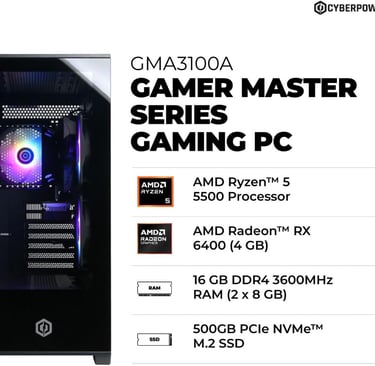
CyberPowerPC Gamer Master Gaming PC, AMD Ryzen 5 5500 3.6GHz, Radeon RX 6400 4GB, 16GB DDR4, 500GB PCIe Gen4 SSD, WiFi Ready & Windows 11 Home (GMA3100A)